Description
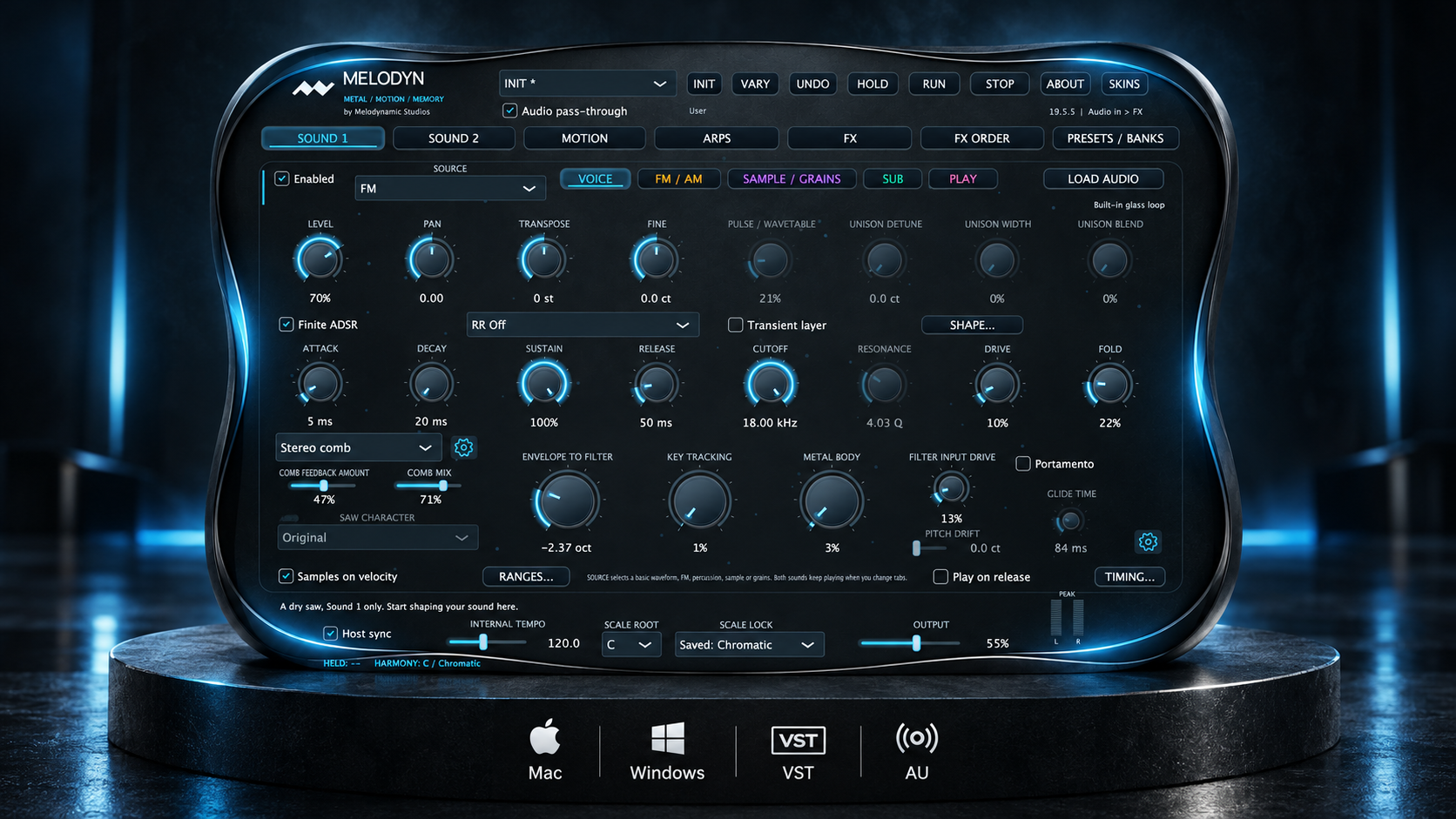
Melodyn combines a synthesizer, sampler and effects processor. Start with a Factory preset, build a sound from scratch, or turn your recordings into playable instruments.
What’s included
Synthesis & sampling
Layer two sound sources using wavetable, FM, samples or granular synthesis. The multisampler detects beats and root notes, then maps samples across the keyboard.
Performance controls
Add movement with two arpeggiators, modulation and macros. Set keyboard splits and velocity ranges to control how each layer plays.
MelodynFX
Process live audio with a vocoder, spectral effects, saturation, tape and vinyl textures, delay, tremolo and reverb. Change the effect order to shape the sound.
Compatibility
Mac: Apple Silicon and Intel. AU and VST3, with Instrument and FX plug-ins.
Windows: Windows 10/11 (64-bit). VST3 Instrument and FX.
Both installers are included. Existing customers can download the latest version from My Account → Downloads.
Meet Melodyn
Official Melodyn promo
Making of MELODYN
I started MELODYN because I wanted to make something inspiring—an instrument people would enjoy spending time with, exploring, and making their own.
That wish became a project in 2024, working with @marcos, a designer from France. Since then, it has grown through collaboration, experimentation, and ideas that took us in directions we hadn’t originally planned.
Some of those ideas were about sound: the metallic character of the early FM synth, two arpeggiators interacting, or a short resonance that could follow the pitch of a note. Others were about how it feels to explore an instrument. The macros, LFOs, and effects became part of that exploration—ways to give a sound movement and discover different possibilities within it.
As MELODYN grew, we explored samples, granular textures, wavetables, and vocoding. We created presets from scratch, recorded and processed piano performances for The Piano, and shaped additional samples in Pro Tools. Each new direction brought more decisions about what belonged in the instrument and how it should work.
AI became part of the development process along the way. We used it alongside engineering, DSP research, and additional technical assistance to help develop and connect parts of the instrument. Codex also assists with ongoing development and expansions. Melodynamic Studios provides the creative direction, with engineers and musicians contributing their skills to bring those ideas into a usable instrument.
The visual side matters to me, too. Our underwater, forest, Halloween, and paper-inspired campfire environments began as hand-drawn sketches by the team. I wanted opening MELODYN to feel like stepping into a place where you could be curious and creative.
There are people behind those details: the two engineers who worked on the core scripting, the team creating its visual worlds, the paid actor who recorded the original voiceover, and the paid musicians we’re working with on future sample packs.
My hope is that some of that care reaches you when you use it. Maybe you find a sound that starts a song, a texture you weren’t expecting, or simply enjoy a few minutes of exploring. That’s the experience I wanted to make, and it continues to guide MELODYN.
What’s new
Loading release notes…